
Tteokguk (Korean Rice Cake Soup)
A Bowl for New Beginnings
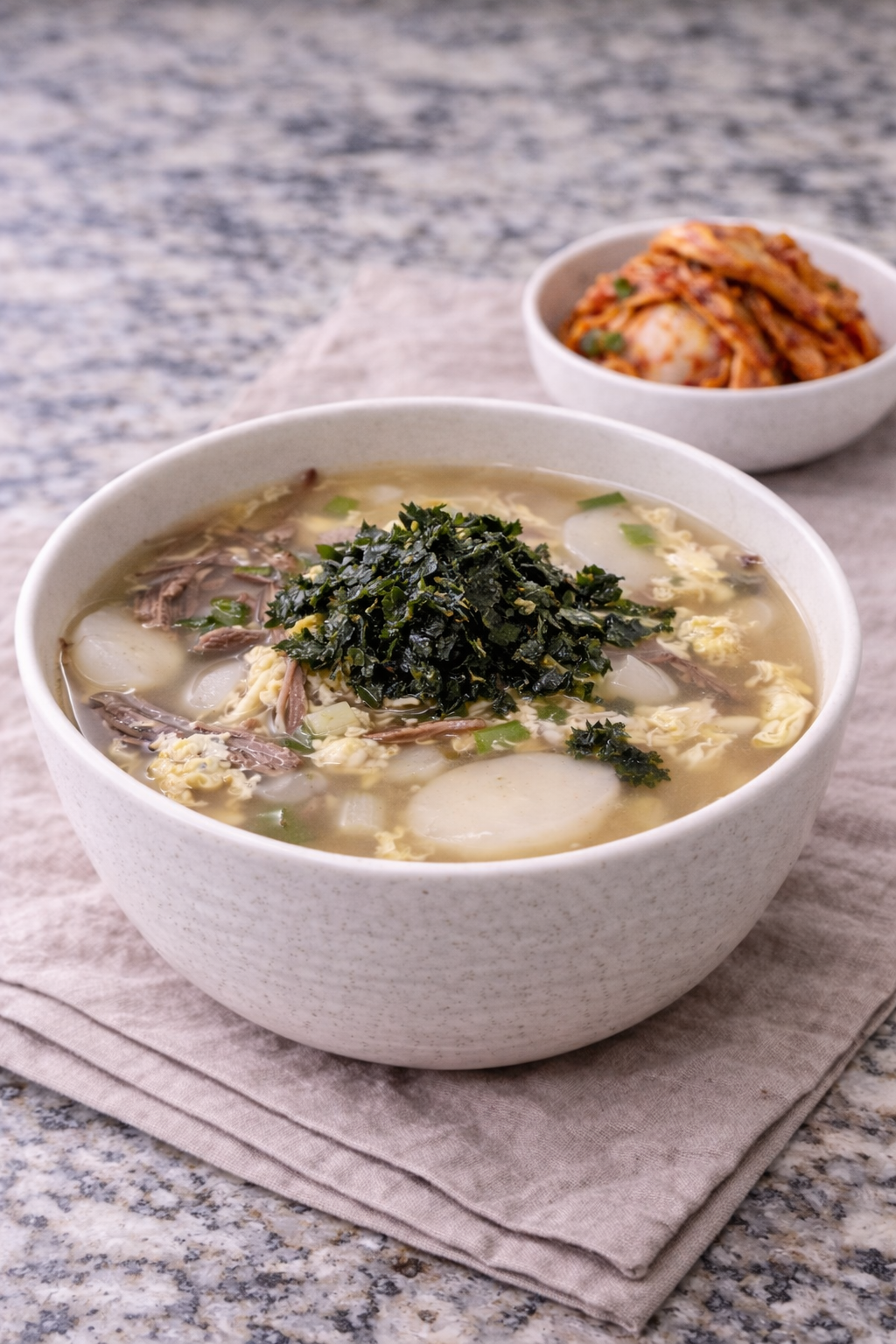
There’s a gentle sense of tradition in a bowl of Tteokguk(떡국). In Korea, this simple rice cake soup is eaten on New Year’s Day as a way of “starting fresh” — the clear broth symbolizes clarity and renewal, and the thinly sliced rice cakes are shaped like coins, a hopeful nod toward prosperity in the year ahead. There’s also a saying that you “become a year older” after finishing your bowl, which makes the meal feel almost ceremonial. Warm, savory, and quietly comforting, tteokguk is the kind of food that marks a new beginning while still feeling like home.
Welcoming the Year with Warm Soup
Tteokguk is the kind of soup that feels familiar even if you didn’t grow up with it. The broth is gentle and savory, and the rice cakes soften just enough while still keeping a pleasant chew. Some families make it very clear and light, and others add beef or dumplings to make it heartier. This recipe keeps things straightforward, with a few options so you can make it with whatever broth you have at home. It’s simple, cozy, and easy to return to year after year.
Ingredients
- 1 lb sliced Korean rice cakes (tteok), rinsed and soaked 15 minutes
- 6 cups broth of your choice:
- anchovy–kelp broth, or
- chicken broth, or
- light beef/bone broth, or
- 6 cups water + 4–6 broth coins/tablets, or
- 6 cups water (season well with soy sauce + salt)
- Meat (choose one):
- 6 oz thinly sliced beef (brisket, sirloin, or stew beef), cut bite-size
- or 6–8 oz ground beef
- 2 cloves garlic, minced
- 2 Tbsp soy sauce, divided
- 1 tsp sesame oil (optional)
- 2 eggs, lightly beaten
- 2 green onions, thinly sliced
- Roasted seaweed (gim), cut into thin strips
- Salt and freshly ground black pepper, to taste
Optional: 6–8 frozen mandu (dumplings)
Make Your Own Beef Broth (and Use the Beef as Garnish)
If you have time, this is a lovely, traditional way to make tteokguk.
You simmer the beef to create a deeper broth — then slice the beef and use it as the topping.
What you’ll need:
- 8–10 oz brisket or stew beef
- 6 cups water
- Soy sauce + salt (to taste)
How to do it:
- Simmer the beef:
Add the beef and water to a pot. Bring to a gentle simmer (not a strong boil).
As it cooks, use a spoon to skim off any foam that rises to the top.
Continue simmering 30–40 minutes, until the beef is tender. - Remove and slice:
Take the beef out. Let it cool slightly, then slice thin or shred. Set aside for garnish. - Skim and season:
Skim off any remaining foam or excess fat.
Season the broth with soy sauce and a little salt. - Continue the soup:
Add the rice cakes to the broth and finish the recipe as written.
Garnish each bowl with the sliced beef, green onion, and seaweed.
Skimming keeps the broth clear and tastes cleaner — totally worth the extra minute.
Instructions
1. Soak the rice cakes:
Rinse the tteok under cool water, then soak in a bowl of water for 10–15 minutes. Drain before using.
2. Cook the meat:
Heat a pot or Dutch oven over medium. Add the beef and garlic.
- If using sliced beef: cook just until no longer pink.
- If using ground beef: cook, breaking it into small pieces. Spoon off extra fat if needed.
Stir in 1 tablespoon soy sauce to lightly season.
(If you already made homemade beef broth, just bring that broth back to a simmer and skip the meat cooking here — use the sliced beef as your garnish later.)
3. Build the broth:
Pour in 6 cups broth (or water + 4–6 broth coins/tablets).
Bring to a gentle simmer and cook 5–7 minutes so the broth picks up flavor.
(For a clearer broth, avoid boiling hard.)
4. Add the rice cakes (and mandu if using):
Stir in the soaked tteok.
Simmer 6–8 minutes, until soft and slightly chewy.
Add mandu during this step and cook until heated through.
5. Season to taste:
Stir in the remaining 1 tablespoon soy sauce.
Taste, then add salt and pepper as needed.
A tiny drizzle of sesame oil is nice (optional).
6. Add the egg — choose your style:
- Egg ribbons: slowly drizzle the beaten eggs into the simmering soup, gently stirring.
- Egg garnish (jidan): cook a thin omelet in a small pan, slice into strips, and save for topping.
7. Finish and serve:
Ladle into bowls. Top with green onions, seaweed, and pepper.
Add the sliced beef on top if you made your own beef broth.
If using jidan, place it over the soup as garnish.
Why a Dutch Oven?
A Dutch oven is one of the best tools for making soup. Its heavy cast-iron walls hold heat evenly, so your soup simmers gently without scorching. The thick lid keeps moisture locked in, helping flavors deepen as everything cooks together. It’s also roomy enough for generous batches, perfect for family meals or storing leftovers.
Another bonus is versatility: you can sauté onions, brown meat, and simmer broth all in the same pot, so fewer dishes pile up in the sink. Whether on the stovetop or finished in the oven, a Dutch oven makes the process simple and reliable—just the way soup should feel.
Affiliate note: I use this Dutch oven (affordable and dependable), and it has served me well for everyday cooking. If you like cooking in bigger batches, the larger 7-quart version is great for soups and stews that feed a crowd. There are also higher-end options like this one or this one, which many cooks love for brand reputation and long-term reliability.
Storage:
- Store leftovers in the fridge for up to 2 days.
- Reheat gently with a splash of water or broth.
- The rice cakes will soften as they sit.
- Do not freeze — they become mushy after thawing.
Note:
- Soak the rice cakes 10–15 minutes so they cook evenly.
- Keep the soup at a gentle simmer for a clearer broth.
- If using broth coins, start with 4 and add more only if needed.
- Ground beef works best with light seasoning.
- Add mandu with the rice cakes so they finish together.
This post contains affiliate links. As an Amazon Associate, I earn from qualifying purchases.
Thank you for being here as I start this journey. I can’t wait to share more recipes, tips, and stories with you — one crumb at a time.
Stay tuned,
~ Clever Crumbs